Cat Peeing Outside the Litter Box: What to Check First
A cautious guide to litter box accidents, including urgent urinary red flags, setup checks, cleaning, and stress factors.
By Cat Cafe Central Editorial DeskUpdated 2026-09-078 min read
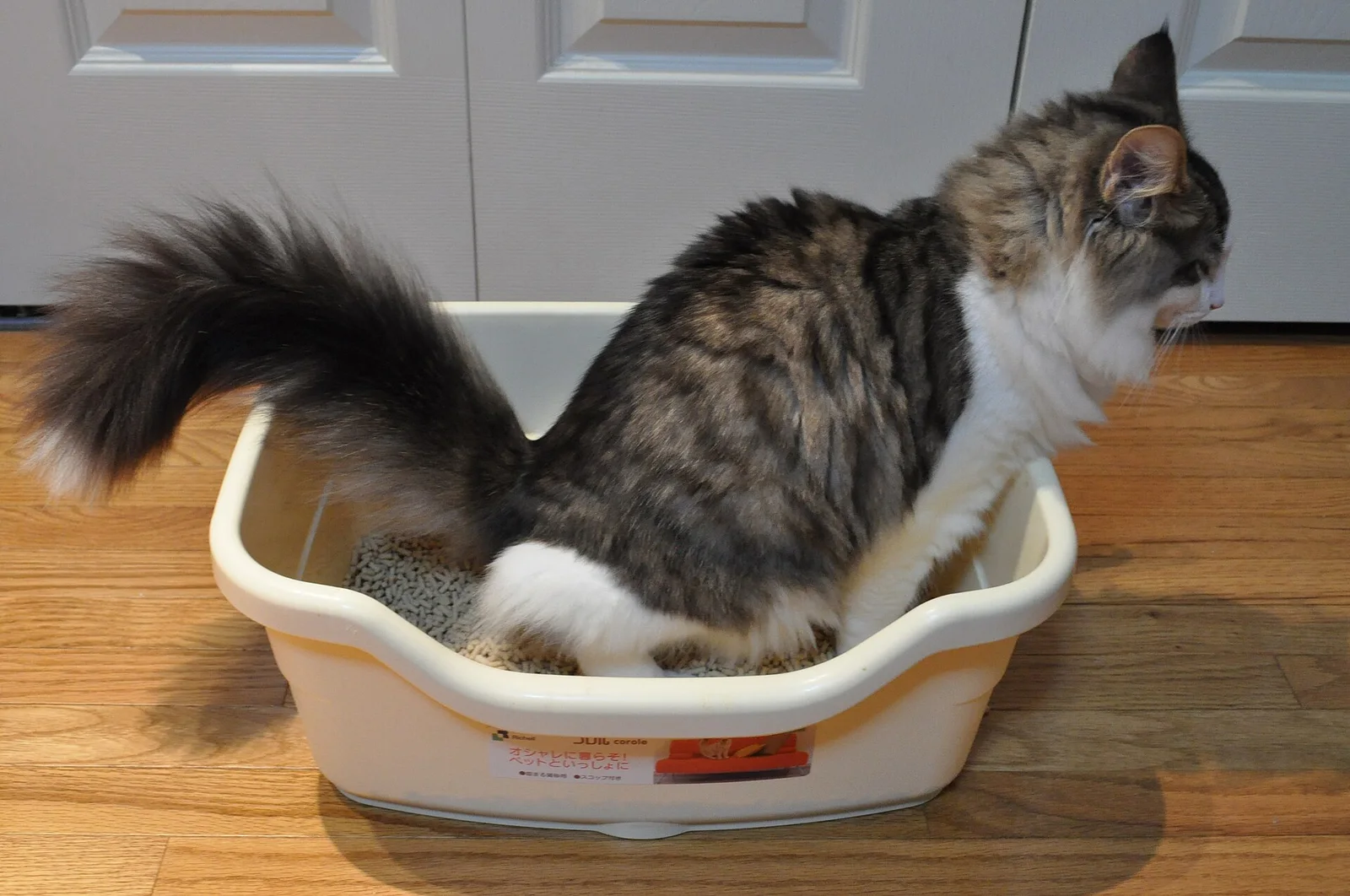
Photo: Ocdp / Wikimedia Commons (CC BY-SA 3.0)
Quick Answer
When a cat starts urinating outside the box, the first question is not "what is the cat mad about" — it is "is this medical." Rule out a urinary problem before changing anything else, especially in male cats. If your cat is straining, crying in the box, producing little or no urine, or has blood in the urine, call a veterinarian immediately. If everything looks medically clear, work through the setup: box count, size, placement, cleanliness, and litter type — one change at a time.
Emergency signs first: straining, repeated trips, crying, blood, tiny amounts, or a male cat who suddenly cannot urinate.
Then check the environment: one box per cat plus one spare, open boxes, unscented litter, quiet corners.
Clean accidents with an enzymatic cleaner so the spot stops smelling like a toilet to the cat.
Use the cat symptom checklist to record what you are seeing before the vet call — frequency, effort, and location patterns help more than memory.
Why Medical Comes First
Urinating outside the box is one of the most common reasons cats are surrendered to shelters, which makes it tempting to treat as a behavior problem. But the leading causes are medical, behavioral, and environmental — in roughly that order of urgency. Cornell's Feline Health Center is direct about it: any condition that makes urination painful or urgent — from urinary tract inflammation to kidney disease or diabetes — can drive a cat out of the box, especially once the cat associates the box itself with pain (Cornell: Feline Behavior Problems — House Soiling).
The scary version of this is lower urinary tract disease, which can progress to a blocked urethra. A blockage is a life-threatening emergency, it happens most often in male cats, and it can look identical to "the cat is peeing on the rug" right up until the cat collapses. Cornell lists the classic signs: straining with little result, frequent trips to the box, blood in the urine, crying while urinating, and urinating in unusual places (Cornell: Feline Lower Urinary Tract Disease). If even one of those is present alongside box accidents, the litter box is the last thing to fix — the vet is the first.
Reading the Accident Before You React
Take a breath and look at the details before you clean anything. Where is the urine? On vertical surfaces — walls, curtains, the side of the sofa — suggests spraying (marking), which is a different conversation from a squat on a horizontal surface. How much? A large puddle near the box often means a cat who could not wait or could not get comfortable in the box. Tiny repeated dribbles in several places are more concerning and more medical than behavioral. Who? In a multi-cat home, the culprit is not always the obvious cat — Cornell suggests separating cats or asking your veterinarian about harmless markers to identify who is soiling (Cornell: House Soiling).
If the accidents are new, sudden, and the cat is otherwise healthy and young, the odds shift toward environment. If the cat is senior, has a history of urinary issues, drinks noticeably more, or has lost weight, the odds shift toward medical — but the rule stays the same: vet first when anything about the pattern looks physical.
Pattern you see
More likely meaning
First move
Straining, crying in the box, tiny amounts, blood
Urinary emergency — possible blockage
Vet or emergency clinic, same day
Sudden new accidents, otherwise healthy young cat
Environment or stress trigger
Vet visit to rule out, then setup check
Large puddle near the box
Could not wait or could not get comfortable
Box count, size, and cleanliness check
Vertical surfaces (walls, curtains)
Spraying / marking behavior
Different conversation — see marking guidance
Senior cat, drinking more, weight loss
Medical — kidney, diabetes, arthritis
Vet first; treat the illness, not the habit
Step-by-Step Plan
Work through this order. It protects the cat first and saves you from re-solving the same accident twice.
Rule out emergency signs. Straining, crying in the box, blood, no urine output for a day, or a bloated painful belly — straight to the vet or emergency clinic, same day. Skip the rest of this list until that is handled.
Book a vet visit for anything new. Even without emergency signs, a sudden change in litter habits deserves a urinalysis. Cats hide illness well, and house soiling is frequently the first visible clue.
Revisit the box setup. Compare your setup against our litter box setup guide: one box per cat plus one spare, in different rooms, never side by side; open boxes roughly 1.5 times the cat's length; unscented clumping litter about 3 cm deep; scooped twice daily. Most avoidance traces to one of these.
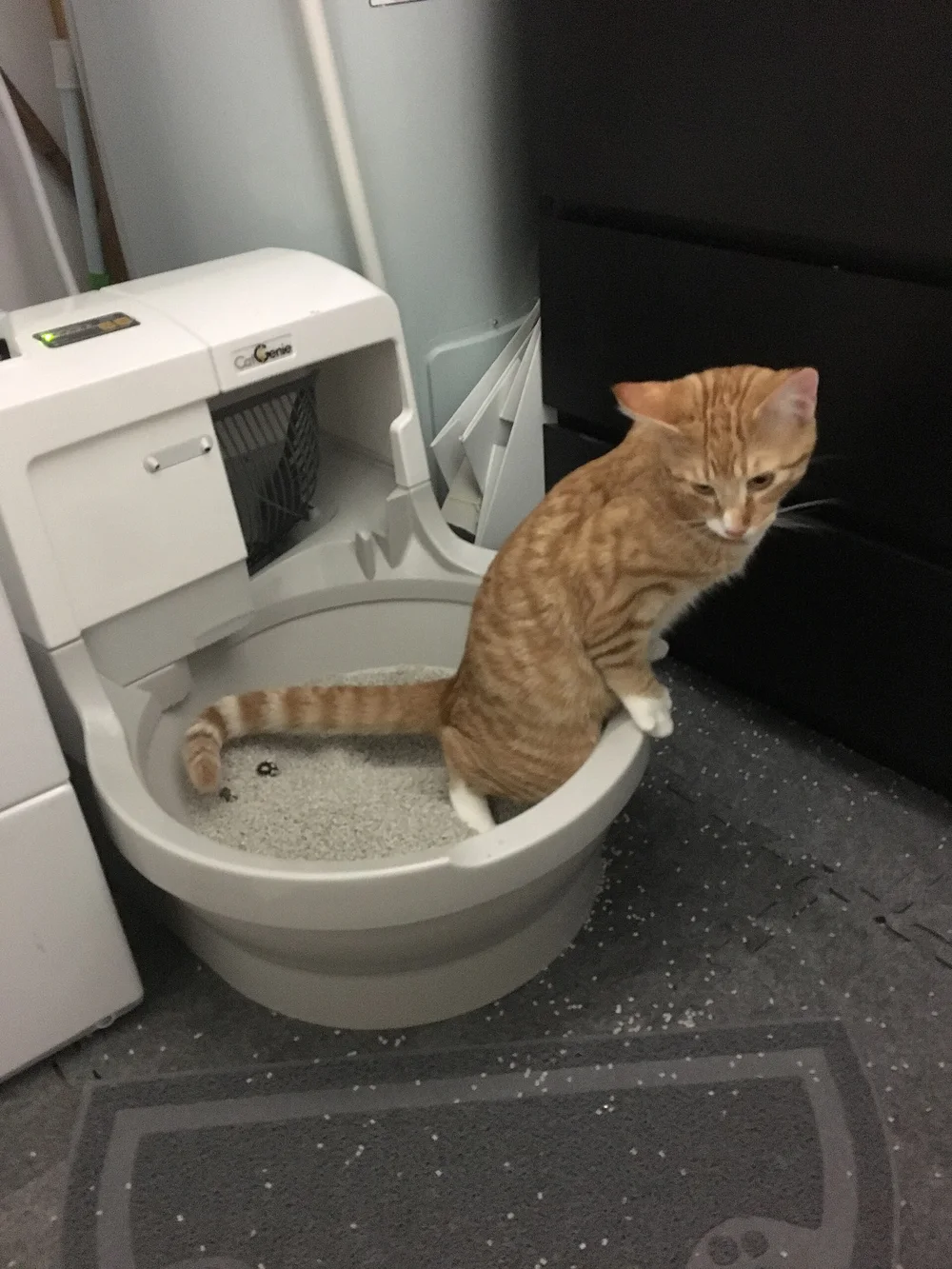
Watch how the cat enters. A cat who perches on the rim instead of stepping in may be telling you the box is too small, too dirty, or painful to stand in. Photo: Ugrashak / Wikimedia Commons (CC BY-SA 4.0) A lower-sided box, larger tray, or different litter texture often solves the hesitation.
Clean properly and keep cleaning. Wash the box with mild unscented detergent — never bleach or phenol cleaners, which can smell like danger territory to a cat and are toxic at strong concentrations. For the accident spots themselves, an enzymatic cleaner is the only thing that actually removes the scent marker. Our litter box cleaning routine walks the daily habit in detail.
Scan for stressors. New pet, new baby, moving boxes, a stray cat visible through the window, a moved feeding station, construction noise — any of these can trigger a setback in a previously reliable cat. Multi-cat households should also check feeding dynamics; see our guide to managing multi-cat feeding, because food stress and litter stress travel together.
Change one variable at a time. If you change box, litter, and location all on the same day, you will not know which fix worked — and you may stack three changes a stressed cat has to re-learn at once.
The setup checklist, at a glance — the AAFP/ISFM feline environmental guidelines set the minimum at one box per cat plus one spare, and most avoidance cases trace to one of these rows:
Check
Target
Why it matters
Box count
One per cat + one spare (n+1)
Competition for a single box is a top avoidance trigger
Box size
Open box, ~1.5× the cat's body length
Covered or cramped boxes trap odor and feel unsafe
Placement
Different rooms, quiet corners, never side by side
Side-by-side boxes read as one vulnerable location
Litter
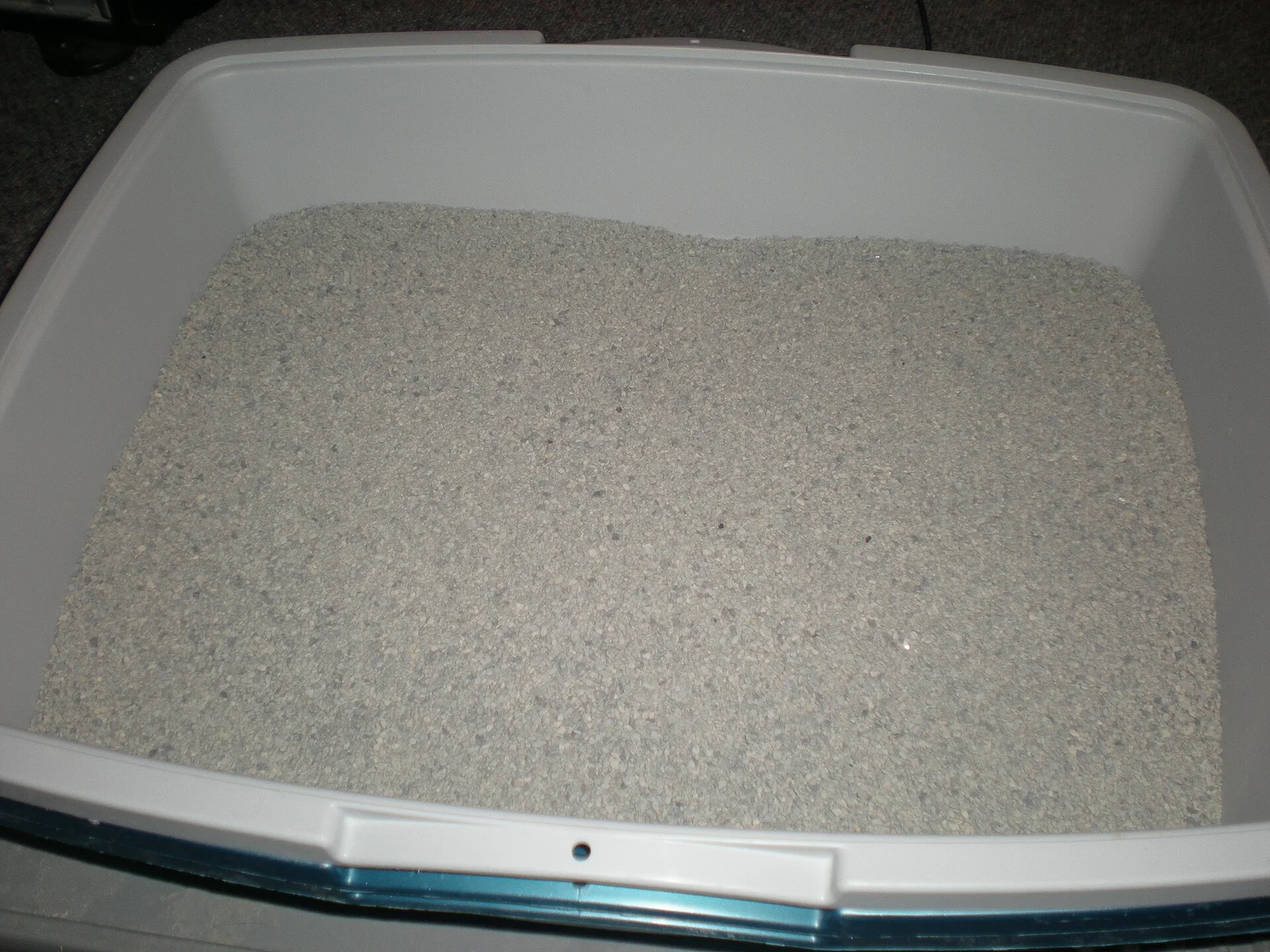
Unscented clumping, ~3 cm deep
Strong scents and texture changes cause avoidance
Cleaning
Scoop twice daily; wash with mild unscented detergent
Dirty boxes are the most common environmental cause
A Practical Example
A two-cat household called about a new habit: the younger cat had urinated on the bath mat three mornings in a row. No straining, no blood, normal appetite — so the vet visit came back clean. The setup check found the problem: the covered box in the bathroom was being monopolized by the older cat, and the second box sat directly beside it — two boxes that read as one territory with one entrance.
The fix took an afternoon: the spare box moved to a quiet corner of the living room, the lid came off the bathroom box, and scooping went to twice daily. The bath mat stayed dry from day four. No punishment, no new litter, no "training" — just a box the younger cat could finally use without negotiating for it. The litter box planner walks through count and placement for your actual rooms.
Small Tips That Make This Easier
Keep a three-day log before the vet visit: time of each accident, location, whether the cat strained or cried, and what changed in the house that week. Vets solve these cases with patterns, and a log is a pattern on paper.
If you cannot identify the soiling cat in a multi-cat home, a cheap USB camera pointed at the box area for 48 hours beats guessing. Cats also urinate outside the box when the box is too dirty for their standards — many cats will use a clean spare box across the room before they will use a dirty box two meters from their favorite spot.
Do not rub a cat's nose in an accident, shout, or confine a cat to a tiny room as punishment. It does not teach anything except that you are unpredictable, and it makes the next accident more likely, not less.
Common Mistakes
Assuming it is behavioral first. Medical causes are common, and the delay is the dangerous part — especially in male cats.
Punishing after the fact. The cat cannot connect your anger to an event from hours ago; you are only teaching fear.
Cleaning with bleach or ammonia products. Ammonia smells like urine to a cat, and phenols (Dettol-type cleaners) are toxic. Enzymatic cleaners are the answer.
Adding a second box right next to the first. Side-by-side boxes read as one vulnerable location, not two choices.
Switching litter brands mid-crisis. A texture change on top of a stress event often makes avoidance worse. Change substrate only after the medical and setup checks are done.
Ignoring it because it is "just the older cat." Senior cats lose litter habits for medical reasons — arthritis making the box hard to enter, kidney disease increasing urine volume — and those are treatable when caught.
When to Call a Vet
Call immediately — do not wait for an appointment — if your cat strains to urinate, cries in or near the box, passes only drops, has blood in the urine, stops urinating entirely, vomits repeatedly, or shows a suddenly painful belly. Male cats with any of these signs can be hours from a life-threatening blockage. For everything else new, a same-week urinalysis is still the right move: litter box avoidance is frequently the first clue to a medical problem. Cat Cafe Central is educational and cannot diagnose your cat.