Quick Answer
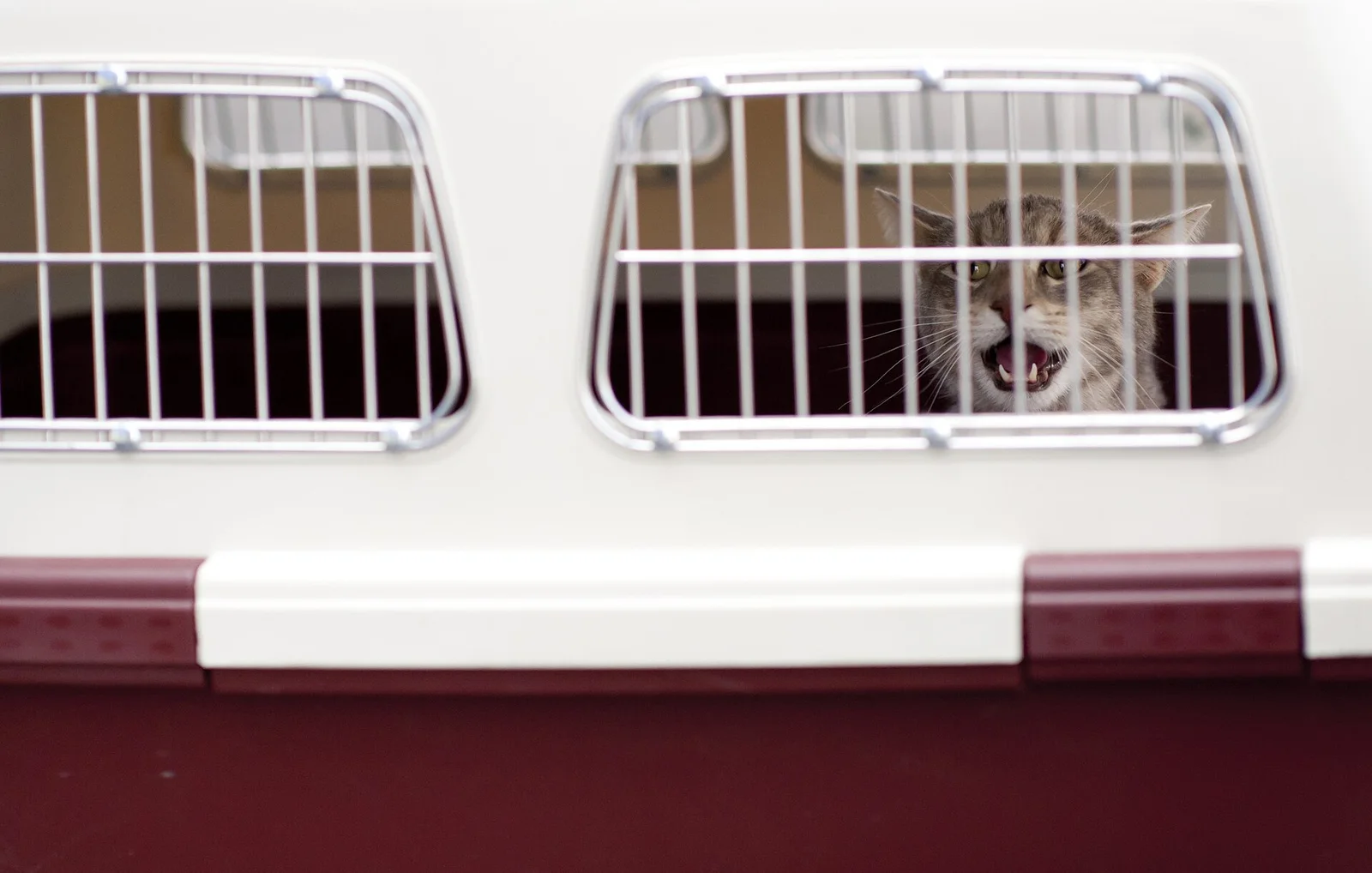
Choose a hard-sided carrier with a top opening — it cleans easily, holds up to a determined cat, and lets you lift a nervous cat in or out without a wrestling match. One carrier per cat, always, and the carrier should live at home as ordinary furniture with the door open, not appear only on vet days (International Cat Care: Travelling with your cat).
- Hard beats soft for cats: solid plastic carriers are strong, washable, and easy to secure — fabric and backpack carriers are harder to clean and often less comfortable for the cat.
- Top-opening or removable top: the single most underrated feature; it changes vet visits for the better.
- Practice beats panic: a few minutes of carrier training over a week or two turns "carrier = vet" into "carrier = treats sometimes."
What Actually Makes a Good Cat Carrier
Carriers are not one-size-fits-all, but they do sort cleanly by design. The needs are consistent: strong enough to prevent escape, easy to clean if the cat soils or is sick in it, well ventilated, secure to fasten into a car, and easy to get the cat into and out of (iCatCare).
| Carrier type | Strengths | Weaknesses | Verdict |
|---|---|---|---|
| Hard plastic, top-opening | Strong, washable, easy loading via the top, vets can examine with the top off | Bulky to store | The default best choice for most cats |
| Hard plastic, front-door only | Strong, washable, widely available | Loading a reluctant cat is harder | Fine if the cat walks in; consider a top-door model otherwise |
| Fabric / soft-sided | Light, collapses for storage, often airline-friendly | Harder to clean when soiled; determined cats can claw through zips and seams | OK for calm cats and short trips |
| Backpack carriers | Hands-free, look modern | Poor ventilation, the cat cannot hide, lots of movement | Not recommended as a primary carrier |
| Cardboard boxes | Cheap, disposable | Not strong; useless if wet or soiled | Emergency-only, not a plan |
On size: bigger is not automatically better. A cat feels safer in a snug space — one where they can stand, turn around, and lie comfortably, but not rattle around in. For air travel, confirm the airline's own requirements well in advance; for car travel, a carrier that fits behind a front seat or on a back seat with a seatbelt threaded through the handle works well. A large crate can work for a cat that is used to it, but you still need a small carrier to get the cat between house and car — which is exactly why the carrier itself deserves the training effort.
Make the Carrier Part of the Furniture
The single biggest upgrade to vet-day quality of life costs nothing: leave the carrier out, permanently, with the door wedged or bungeed open. Put a blanket that smells of home inside, toss treats in occasionally, and let the cat discover it as a nap spot. Cats choose small enclosed spaces to sleep in by instinct — a carrier left open is a den, and a den the cat already loves is not a trap on vet morning.
If your cat is anxious, add a synthetic feline pheromone spray on the bedding about 15-20 minutes before any actual use, so the alcohol carrier smell dissipates before the cat goes near it. You can also feed near the carrier, then inside it, building the association food = carrier = good. This practice pays compound interest: the same carrier skill transfers to every future trip, from bringing home a new cat to the emergency dash you cannot plan for.
A Practice Plan, from Coexistence to Car Rides
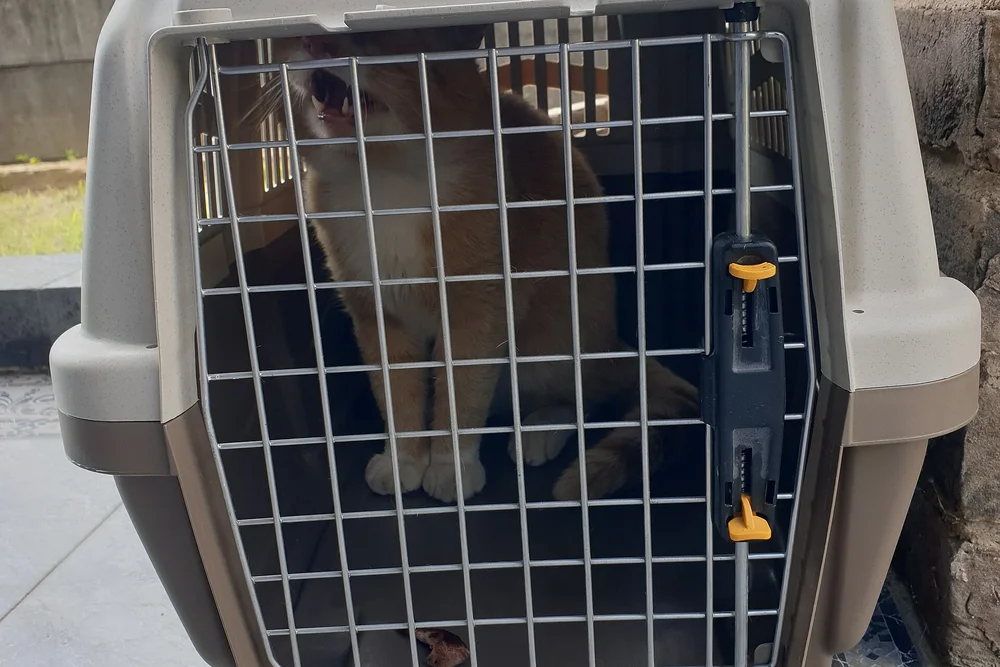
Carrier training works the same way as all cat training: tiny steps, each one easy enough to succeed, always ending before the cat is done. A two-week plan that works for most cats:
- Days 1-3 — proximity: carrier out, door open, treats and play sessions nearby. No forcing, no pushing the cat toward it.
- Days 4-6 — entry: treats inside the carrier, at the far end. Let the cat step in and back out freely, as often as they like.
- Days 7-9 — door: once the cat enters confidently, close the door for one second, treat, open. Build to ten seconds, then thirty. Stay calm; if the cat bolts, you went too fast — go back a step.
- Days 10-12 — lifting: pick the carrier up briefly while the cat is inside, put it down, treat. Then carry it to another room and back.
- Days 13-14 — the car: carrier into the car with the cat, engine off, treat, back inside. Then engine on for a minute. Then a two-minute drive around the block ending back home — so a car ride stops predicting a vet visit.
If your cat is already a confident carrier user, skip to maintenance: keep it out, keep it pleasant, and do one "dry run" to the car every few months. The whole point is that the day you actually need the carrier — vet visit, move, emergency — the cat has practiced this exact skill a dozen times over, calmly, while nothing was at stake.
Travel Day: The Ten Rules That Matter
- Cover the carrier during travel with a familiar towel or blanket — blocking out the visual world is often the difference between yowling and settling.
- Secure it properly: seatbelt through the handle on a back seat, or snug in a footwell, on a towel to soak up accidents and keep the base level.
- Withhold food for about 4-5 hours before the journey in case of carsickness; offer water up to departure and during breaks where possible.
- Never let the cat out of the carrier in a moving car, no matter how much they protest — for their safety and yours.
- One carrier per cat. Even bonded pairs should travel separately; stress can dent a friendship, and two fighting cats in one small box is a real risk.
- Talk quietly, keep the radio low, and avoid sudden movements — cats pick up on driver tension, and the point is calm continuity, not silence or comforting babble.
On arrival anywhere — clinic, friend's house, hotel — do not open the carrier in the open. Move the cat, still in the carrier, into a secure closed room first, then open the door and let them choose when to come out. Our vet care primer covers what happens after the carrier arrives at the clinic, and the symptom checklist helps you decide when a trip is worth it in the first place.
Common Carrier Mistakes
- Buying the carrier the day of the vet visit. A brand-new, smell-free box on Vet Morning reads as "something is wrong" to a cat — the practice needs to happen before the appointment, not during it.
- Storing it out of sight. In a cupboard, it only appears for transport. Out in the room, it is a den the cat chooses on normal days.
- Two cats, one carrier. Saves a hand, costs a friendship — always separate.
- Chasing the cat around to load it. Every chase teaches "the human is dangerous when the box is out." If a cat flees the carrier, wrap them gently in a towel and lower them in through a top opening instead.
- Sedating on a friend's advice. Never use human or over-the-counter sedatives; if travel stress is severe, ask your vet about cat-specific options (iCatCare).
When to Get Help
Some cats find even careful practice overwhelming — drooling, panting, and panic in the carrier despite two calm weeks of training is information, not failure. For those cats, speak to your veterinary team before the next trip: clinics can often arrange quieter appointments or minimal-handling protocols, and veterinary guidance on travel anxiety is the safe path. Cat Cafe Central is educational content and cannot prescribe for your cat — for extreme distress, carsickness, or a cat who cannot be safely transported, contact your vet (see also helping a shy cat settle in).
Trusted Sources
Related Guides and Tools
Vet Care Basics for New Cat Owners: Visits, Records, and Red Flags
Understand routine veterinary care, adoption exams, records, vaccine conversations, and signs that should not wait.
How to Help a Shy Cat Settle In Without Pushing Too Hard
A gentle plan for shy cats using safe rooms, predictable visits, low-pressure play, scent, and patience.

Bringing Home a New Cat: A Gentle First 72-Hour Plan
A step-by-step first three days plan for helping a new cat decompress, eat, explore, and trust the household.
Related glossary: Carrier Training, Safe Room, Stress.