Quick Answer
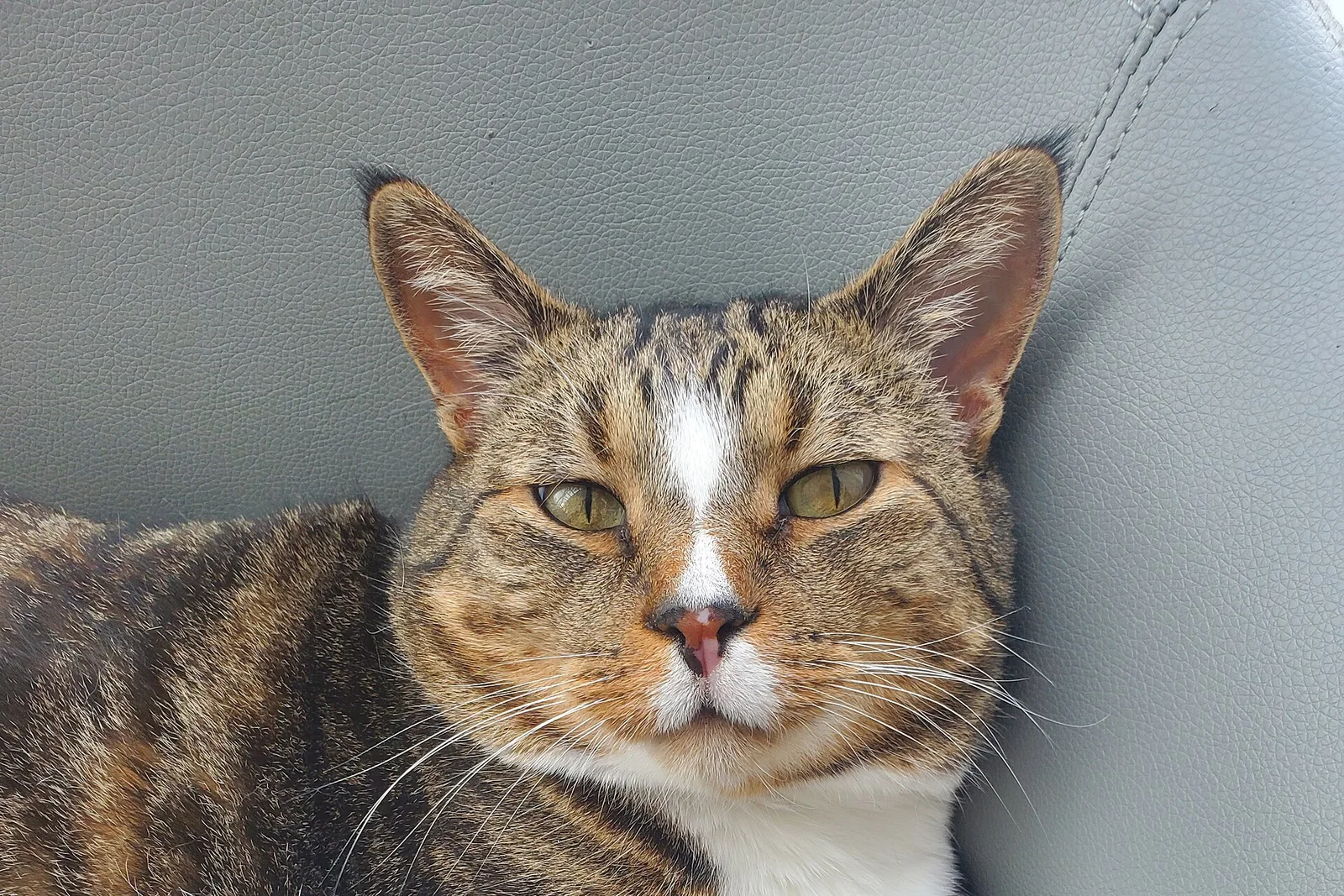
A slow blink is a cat's most gentle sentence: "I am relaxed, and I mean you no harm." The eyelids drift half-closed, linger, and sometimes close all the way for a moment — and that narrow-eyed look is the feline version of a warm, honest smile. The best part: it is a two-way channel. Simply slow blinking at your cat has been shown to make them blink back more and even approach people they do not know. It takes five seconds to learn and it changes how your cat reads you.
- What it looks like: a series of half-blinks that settle into a prolonged narrow or a full, soft eye closure — not a fast everyday blink, not a wide-eyed stare.
- What it means: non-threat, trust, contentment. In cat language, narrowed relaxed eyes signal safety, while wide unblinking eyes signal tension (International Cat Care).
- Proven to work both ways: research from the University of Sussex found cats respond to human slow blinks with more blinking of their own and are more likely to approach a slow-blinking stranger.
- How to do it: soften your face, meet your cat's gaze gently, close your eyes slowly for a second or two, open slowly — then wait. Their reply may be a half-blink, a head turn, or a slow walk toward you.
What Exactly Counts as a Slow Blink
Researchers describe the slow blink sequence precisely: a run of half-blinks — where the eyelids travel toward each other without ever fully closing — followed by either a long, steady narrowing of the eyes or a genuine closure that lasts a moment. It is directed and deliberate, which is what separates it from the housekeeping blinks that keep a cat's eyes moist all day. You will usually see it when your cat is settled: lying on a windowsill, tucked on your lap, watching you from across the room with soft, unhurried eyes.
The look has three close cousins worth telling apart. A sleepy blink slides all the way down and stays down — that is a nap beginning, not communication. A squint that happens all the time, in one or both eyes, can be irritation or pain rather than affection (more on that further down). And a stare is the opposite instrument entirely: wide eyes, little blinking, often a tense body — a different signal with its own guide. The slow blink is what a stare is not — an eye-narrowing that says the opposite of threat.
What the Science Actually Found
This is one of the rare bits of cat folklore that has been tested properly, by animal-behavior researchers at the University of Sussex and the University of Portsmouth. Two experiments from the same research group are worth knowing, because they turn "slow blink back at your cat" from cute advice into evidence:
| Study | What they did | What they found |
|---|---|---|
| Humphrey et al., Scientific Reports (2020) — the slow-blink experiments | Owners slow blinked at their cats; separately, an unfamiliar experimenter either slow blinked at cats or held a neutral face | Cats blinked and narrowed their eyes more when their owner slow blinked at them, and were more likely to approach the experimenter's outstretched hand after a slow-blink exchange than after a neutral face |
| Humphrey et al., Animals (2020) — the shelter study | Tested slow-blink responses in shelter cats and tracked how quickly they were adopted | Cats that showed more and longer eye closures in response to human slow blinks were rehomed faster — and the more anxious cats tended to slow blink more themselves |
The takeaway is not that cats secretly speak English. It is that cats pay attention to human faces, particularly to our eyes, and that a slow blink reads to them as a positive, non-threatening signal. The shelter result adds a practical twist: shy or nervous cats may lean on slow blinking as a coping tool, which makes your own slow blinks especially useful when you are trying to befriend a cautious cat (our shy-cat settling guide covers the rest of that process).
Why It Works — Eyes Are a Conversation
Cats are both predators and prey animals, and their eyes are built to communicate with both roles in mind. A cat fixing another cat with wide, unblinking eyes is gathering information about a possible threat or preparing to act — International Cat Care notes that wide-eyed staring with little blinking shows up in antagonistic encounters. Narrowed, relaxed eyes with blinking and winking are the non-threatening counterpart: a visual "all calm here."
When you intentionally slow blink, you are doing something cats already do to each other, in a form their eyes can read. The Sussex researchers point out that eye narrowing also appears in positive moments across other species — the play faces of dogs and the genuine (Duchenne) human smile — which suggests it is a fairly old, cross-species signal of "no threat intended." That is why slow blinking tends to work even on cats who do not know you: you are not mimicking a meow, you are speaking in eyes — a skill that fits neatly alongside reading cat body language as a whole.
How to Slow Blink at Your Cat — Step by Step
- Pick a calm moment. Your cat should be somewhere comfortable — on a perch, a sofa, the floor — with the option to leave. A slow blink at a cornered cat is just a stare with good intentions.
- Soften before you start. Relax your own face and shoulders first, then find your cat's gaze without locking on. If your cat looks away, that is fine — it is defusing, and you can try again later.
- Blink slowly and completely. Close your eyes for a beat or two as if you were sleepy, then open them slowly. Not a theatrical wink — a soft, unhurried close and open.
- Wait for the reply. A half-blink, a slow blink back, a head tilt, an ear flick, or a slow approach are all "message received." No reply yet is also an answer: your cat may not be in the mood.
- Reuse it where it matters. Slow blink during nail trims, while your cat is settling into a new home, during quiet moments after play, and before you pick a sleepy cat up. It takes the edge off interactions your cat finds intense (the calm trim routine uses exactly this kind of signal work).
- Do not force it. If your cat's ears flatten, their tail starts lashing, or they break away fast, stop — that is a "not now," and pressing a nice signal into a tense moment turns it into a nuisance.
Consistency is what cements it. Cats learn that your narrowed eyes predict gentle, predictable behavior — so the slow blink becomes a small, reliable piece of the relationship, not a party trick.
When to Call a Vet
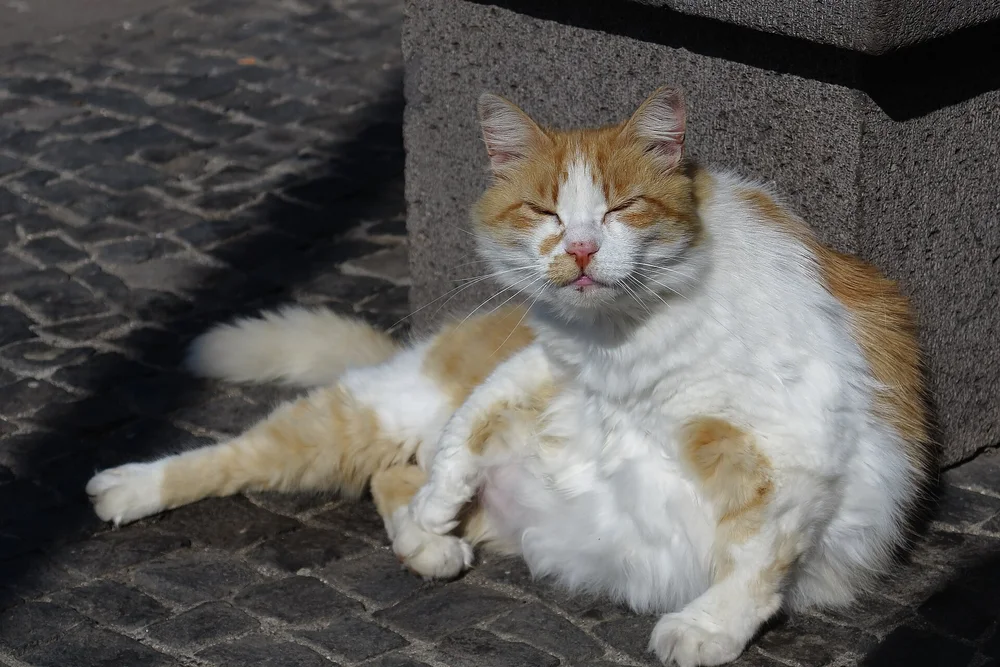
Not every narrowed eye is a compliment. See your veterinarian if an eye stays partly closed most of the time, or if you notice redness, discharge, cloudiness, pawing at the face, light sensitivity, or one eye differing from the other — chronic squinting is a common sign of eye irritation, infection, or injury, and it is not a slow blink. Also call your vet if your cat's demeanor changes at the same time: a usually bright cat that hides, eats less, or stops grooming is not delivering slow blinks, even if their eyes look sleepy. Cat Cafe Central is educational content and cannot diagnose your cat; for anything sustained or worsening, contact your veterinary team.
Trusted Sources
Related Guides and Tools
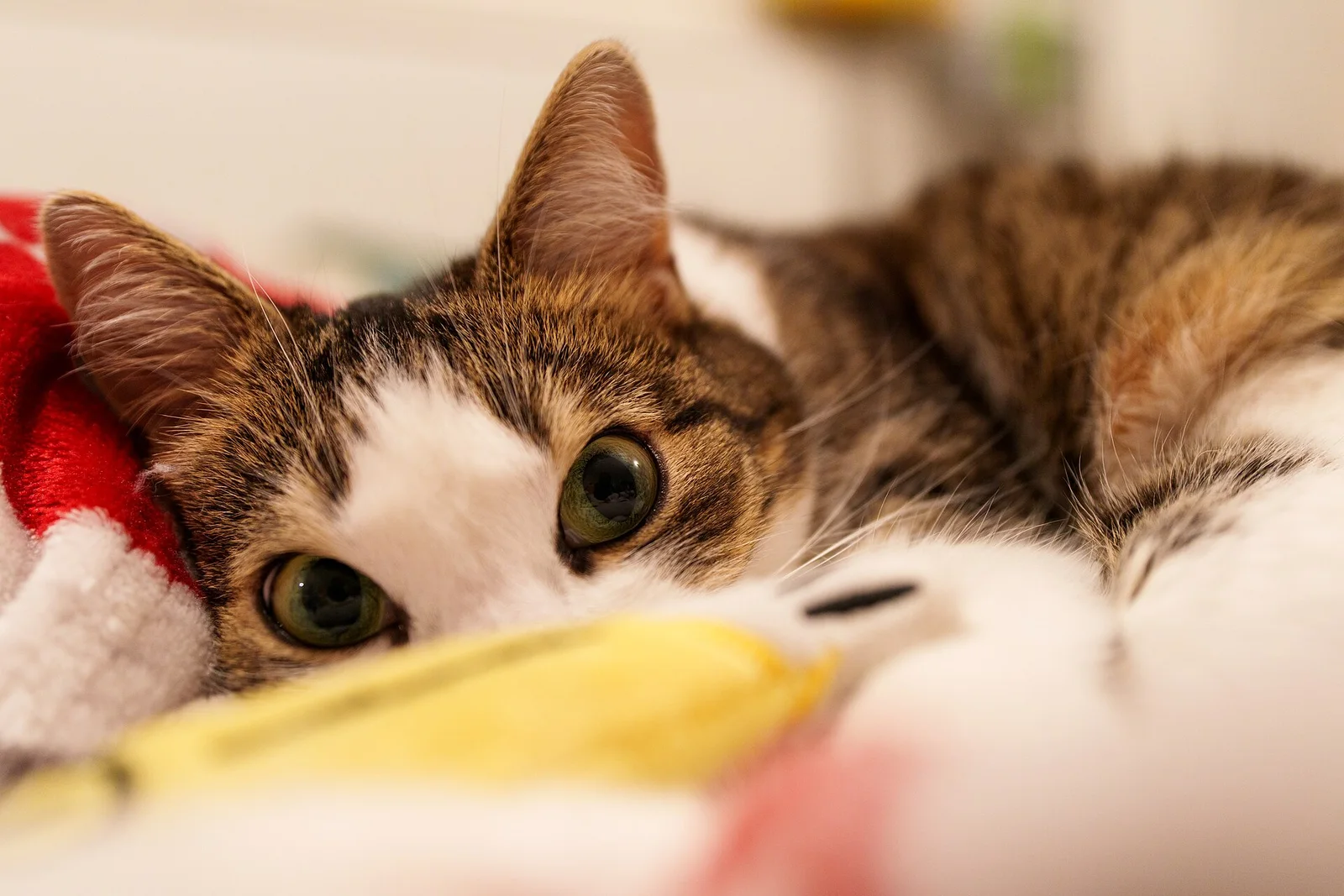
Why Does My Cat Stare at Me? Reading the Stare Before You React
Why does my cat stare at me? Learn to read soft, hard, and demand stares — and exactly how to respond to each, calmly.
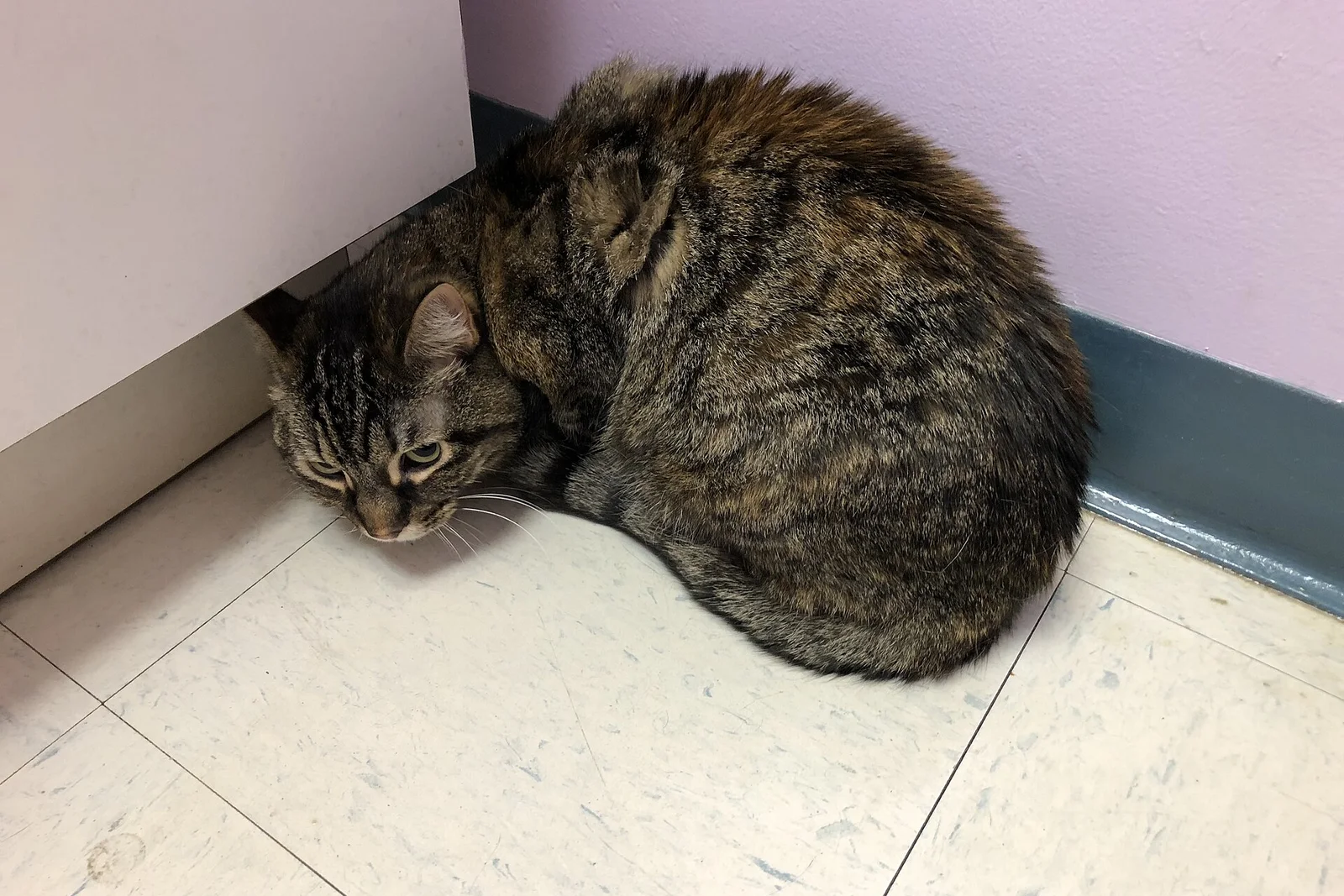
How to Help a Shy Cat Settle In Without Pushing Too Hard
A gentle plan for shy cats using safe rooms, predictable visits, low-pressure play, scent, and patience.
Understanding Cat Body Language: Ears, Tail, Eyes, and Distance
Learn how to read common cat body language signals so you can respond with less pressure and more trust.
Related glossary: Slow Blink, Stress.