Quick Answer
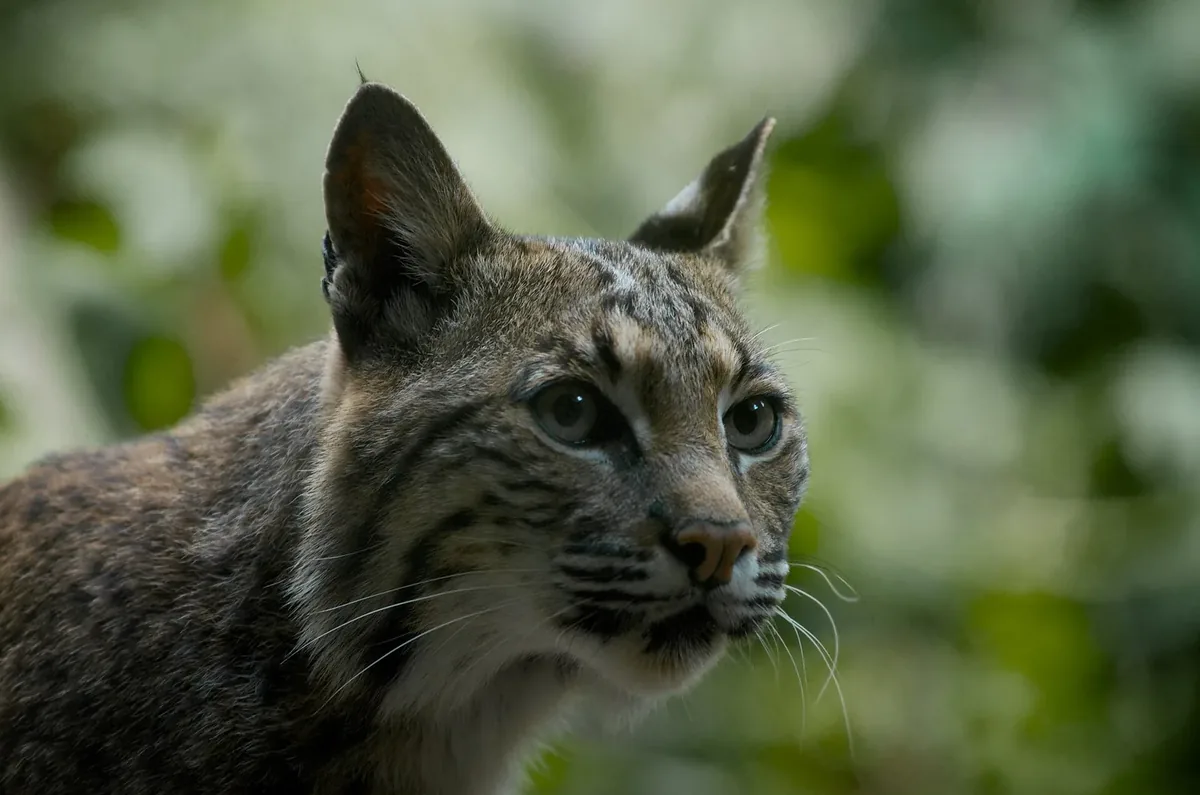
Georgia has one resident native wild cat: the bobcat (Lynx rufus), which the state's Wildlife Resources Division describes as the most widely distributed native felid in North America and found statewide. The eastern cougar is extinct — the U.S. Fish and Wildlife Service removed it from the federal endangered species list in 2018 on the basis of extinction — and Georgia's own reports page states plainly that no credible physical evidence has ever substantiated a breeding mountain lion population in the state.
- Most likely animal in a "big cat" report: a bobcat, a large house cat, a dog, a coyote, a bear — or a river otter moving fast. Georgia DNR says big-cat sightings "usually turn out to be simply a case of mistaken identity".
- Bobcats are common and legal to hunt and trap in regulated seasons: they are classified as both a game animal and a furbearer, so a bobcat near your property is a wildlife-management question, not an emergency.
- Claw marks in a print rule a cat out. Cats retract their claws, so a large track with visible claw marks was made by a dog, coyote or bear (Georgia DNR).
- To report a possible mountain lion: contact your regional Georgia DNR Game Management office, or 800-241-4113 outside business hours.
Which Wild Cats Live in Georgia?
Georgia's wild cat list is short, and the interesting part is what is missing from it. Bobcats are everywhere in the state. Cougars — mountain lions, panthers, catamounts, pumas — are not, and the reason is not mystery but history: the eastern cougar subspecies that once ranged the eastern United States was declared extinct, and USFWS removed it from the endangered species list in 2018 on that basis (USFWS eastern cougar species profile).
| Species | Scientific name | Status in Georgia | What that means for a sighting |
|---|---|---|---|
| Bobcat | Lynx rufus | Resident and found statewide; classified as a game animal and furbearer (Georgia DNR bobcat fact sheet) | By far the most likely wild cat you will see, and the one most "big cat" reports turn out to be |
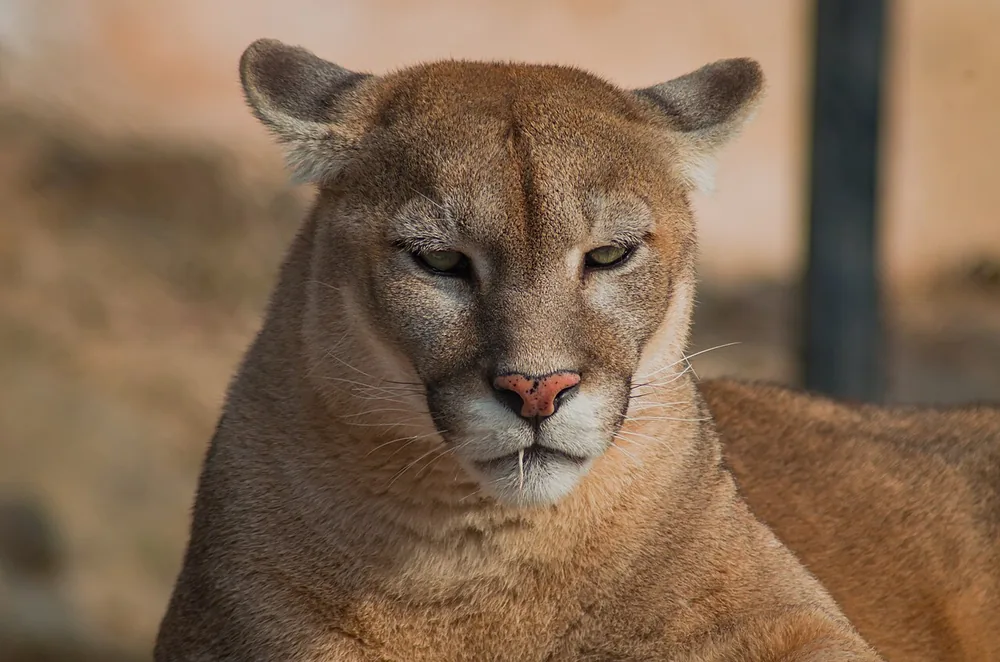
| Eastern cougar | Puma concolor couguar | Extinct; federally delisted in 2018 (USFWS) | No breeding population to see. Rare individuals from other populations can still wander — see the LaGrange case below |
| Florida panther | Puma concolor coryi | Not resident in Georgia; the nearest population is in South Florida (Georgia DNR) | Occasional dispersing animals reach Georgia — three credible sightings in 25 years, all Florida panther related |
| Domestic and feral cats | Felis catus | Widespread | Bobcats do prey on feral cats — one more reason to keep pet cats in at night |
If you came here after a sighting, that table already contains your answer's shape: bobcat if you saw a short tail, and something else entirely if you saw a long one.
Mountain Lion Reports in Georgia: What the Records Actually Show
Georgia's Wildlife Resources Division keeps a public page on this question rather than leaving it to forum folklore. Its summary is worth quoting because it is so specific: "In the last 25 years, there have been only three (3) credible mountain lion sightings in Georgia. These animals were all related to the Florida panther."
The best-known case happened in 2008, when a hunter in LaGrange, in Troup County, shot a large cat while deer hunting. The animal was later genetically identified as a federally endangered Florida panther. The hunter was charged with a federal wildlife violation and sentenced to a $2,000 fine, two years of probation, and a ban on holding a hunting licence anywhere in the United States during the probation (Georgia DNR — Mountain Lion Sightings Not Likely in Georgia).
Two lessons come out of that record. First, an isolated long-tailed cat in Georgia is far more likely to be an endangered Florida panther wandering north than anything else — which makes it a protected animal, not a target. Second, credible evidence means physical evidence: carcasses, trail-camera images, photographs or footage. Georgia DNR states that no such evidence has ever been produced to substantiate a mountain lion population in the state.
What people are actually hearing and seeing
The reports that do come in usually involve distance, darkness, a moment's glimpse or an obscured animal. Georgia DNR notes that mountain lions make little noise in the woods and that the famous "blood-curdling scream" in the night is almost always made by another animal entirely; the agency links to an audio comparison of mountain lion sounds against the animals people commonly mistake them for. The typical misidentifications are bobcats, house cats, dogs, coyotes, bears — and, occasionally, river otters.
Georgia is also home to licensed facilities that keep captive mountain lions, and the agency acknowledges that illegally held captive cats have escaped or been released in the past. An unusually tame, unafraid large cat is a husbandry problem, not a wild population.
The Georgia Bobcat: Numbers, Habits and Range
The bobcat fact sheet from Georgia's Wildlife Resources Division is unusually generous with real figures, which makes it the best starting point for anyone trying to read a sighting or understand a management decision.
| Bobcat detail | Georgia DNR figure |
|---|---|
| Males | 12–40+ lb, averaging 18–28 lb |
| Females | 9–34 lb, averaging 14–20 lb |
| Home range | Some males exceed 10 square miles; a female's may be under one square mile, and ranges overlap |
| Breeding season | Can begin as early as January and run through March; most cats do not breed until their second year |
| Litter | 2–3 kittens on average, after about 62 days' gestation |
| Typical prey | Mice, rats, rabbits and other small mammals; also reptiles, birds and feral cats — and they will feed on road-killed deer |
| Lifespan | Routinely 5–6 years in the wild, sometimes 12–13 |
| Harvest | Trappers take roughly 1,200–1,800 bobcats a year; hunters take three to five times that many |
The habitat line is the one to keep in mind on a property: typical Georgia bobcat habitat is mixed forest and agricultural land with a high percentage of early successional growth — hedgerows, field edges, brushy margins. If your land has a field next to woods, it has bobcat habitat, whether or not you ever see the cat using it. Georgia DNR also notes that bobcats usually avoid areas of high human disturbance and only occasionally cause nuisance problems, though they will take smaller livestock such as goats or chickens.
Tracks and Signs: The One Test That Settles It
Georgia DNR's own guidance on tracks is the most useful single fact in any big-cat conversation: claw marks are not typically visible in the tracks of large cats, because their claws are retractable. Any large print that contains claw marks was most likely made by a dog, coyote or bear. Cats walk on their pads, and the pad shape gives them away — a feline heel pad has a different lobe pattern from a canine one, and cat tracks read square or round rather than long and rectangular.
That is also why "big cat tracks" are such a common mistake: a large dog track with clear claws and a clean stride can look convincing in mud. If you find something genuinely interesting, photograph it with a ruler or a coin for scale, note the location, and send it to your regional Game Management office rather than speculating about it online.
Georgia sits between two states whose answers look different, which is useful context for reading a report: Florida has a resident breeding panther population, while Michigan has bobcats plus rare lynx and dispersing cougars. The Wild Cats section collects all three state guides if you want to compare what neighbours actually report.
Staying Safe, and Keeping Your Own Cats Safe
Georgia DNR's safety advice applies to any large wildlife encounter, and it is worth knowing before you need it:
- Make yourself look large. Raise your arms and wave them slowly.
- Make noise — loud sounds that cannot be confused with the sound of prey.
- Act like a predator. Maintain eye contact, and never bend over or crouch down.
- Back away slowly without turning your back, creating distance as you go.
- If attacked, fight back.
- Keep a safe distance at all times, and report the encounter to the local DNR office.
For cat owners, the local risk is quieter than a cougar headline and much more likely. Bobcats take feral cats — it is listed in their diet by Georgia DNR — and a free-roaming pet cat is functionally a feral cat to a predator. The practical fix is to treat dusk and dawn as indoor hours, then make indoors interesting enough that it is not a punishment: enrichment basics covers climbing, scratching and hunting outlet, and our daily play routine gives an outdoor-bred cat a scheduled hunt that ends in a meal. If you keep chickens or goats, secure them at night — that is the specific nuisance case Georgia DNR names.
How to Report a Sighting in Georgia
Georgia DNR asks that mountain lion sightings go to the Wildlife Resources Division's Game Management Section office for your region, with a single statewide line outside business hours:
- Region 1: 706-295-6041 · Region 2: 770-535-5700 · Region 3: 706-595-4222
- Region 4: 229-426-5267 · Region 5: 229-430-4254 · Region 6: 912-262-3173
- Outside business hours (Mon–Fri, 8:30 a.m.–4:30 p.m.): 800-241-4113
The agency's stated approach is that it takes reports seriously and follows up where appropriate — while still describing mistaken identity as the usual explanation. Reporting well means reporting specifically: where, when, how long you saw it, and whether you have a photo, a track cast or trail-camera video.
Trusted Sources
- Georgia DNR Wildlife Resources Division — Bobcat fact sheet (PDF)
- Georgia DNR — Mountain Lion Sightings Not Likely in Georgia
- Georgia DNR — Living with Wildlife
- U.S. Fish and Wildlife Service — Eastern Cougar species profile
- Missouri Department of Conservation — Mountain lion signs and sounds (linked by Georgia DNR for sound comparisons)
Related Guides and Tools
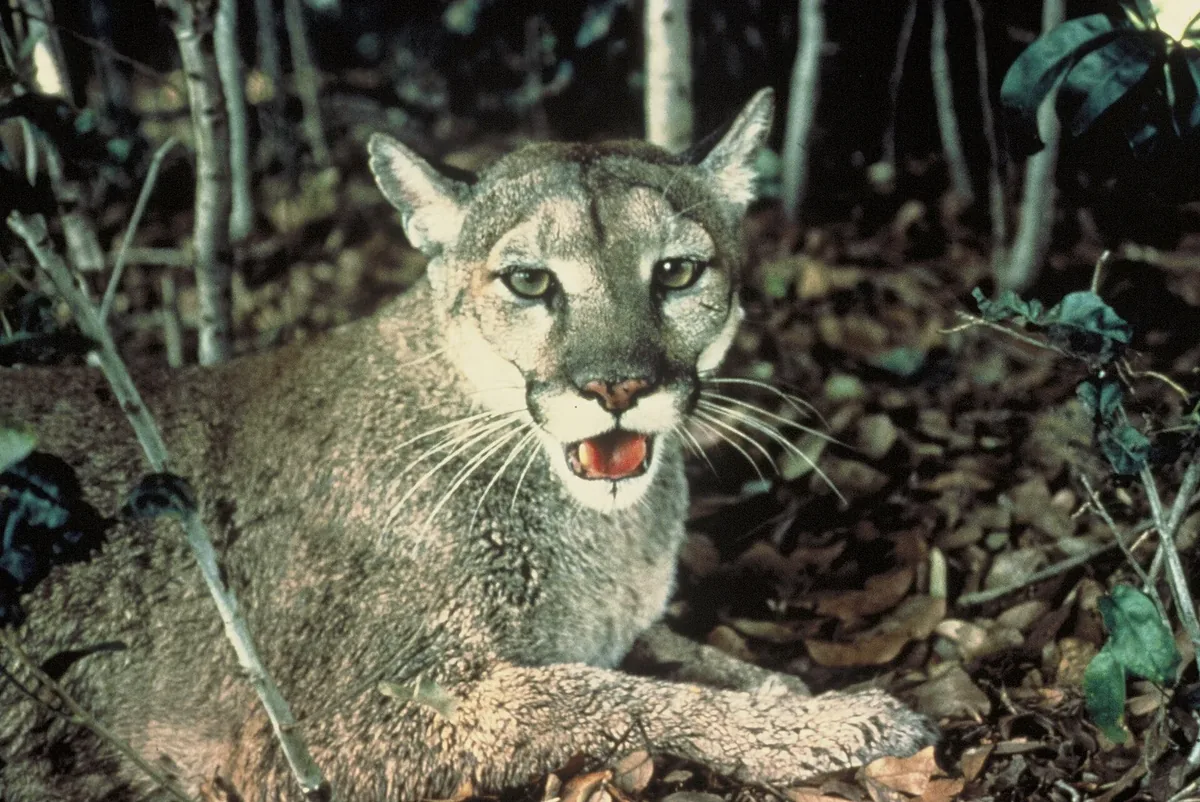
Wild Cats in Florida: Panther, Bobcat and Look-Alikes
Florida has two native wild cats: the endangered Florida panther and the bobcat. Ranges, sizes, tracks, safety and how to report a sighting — with FWC sources.
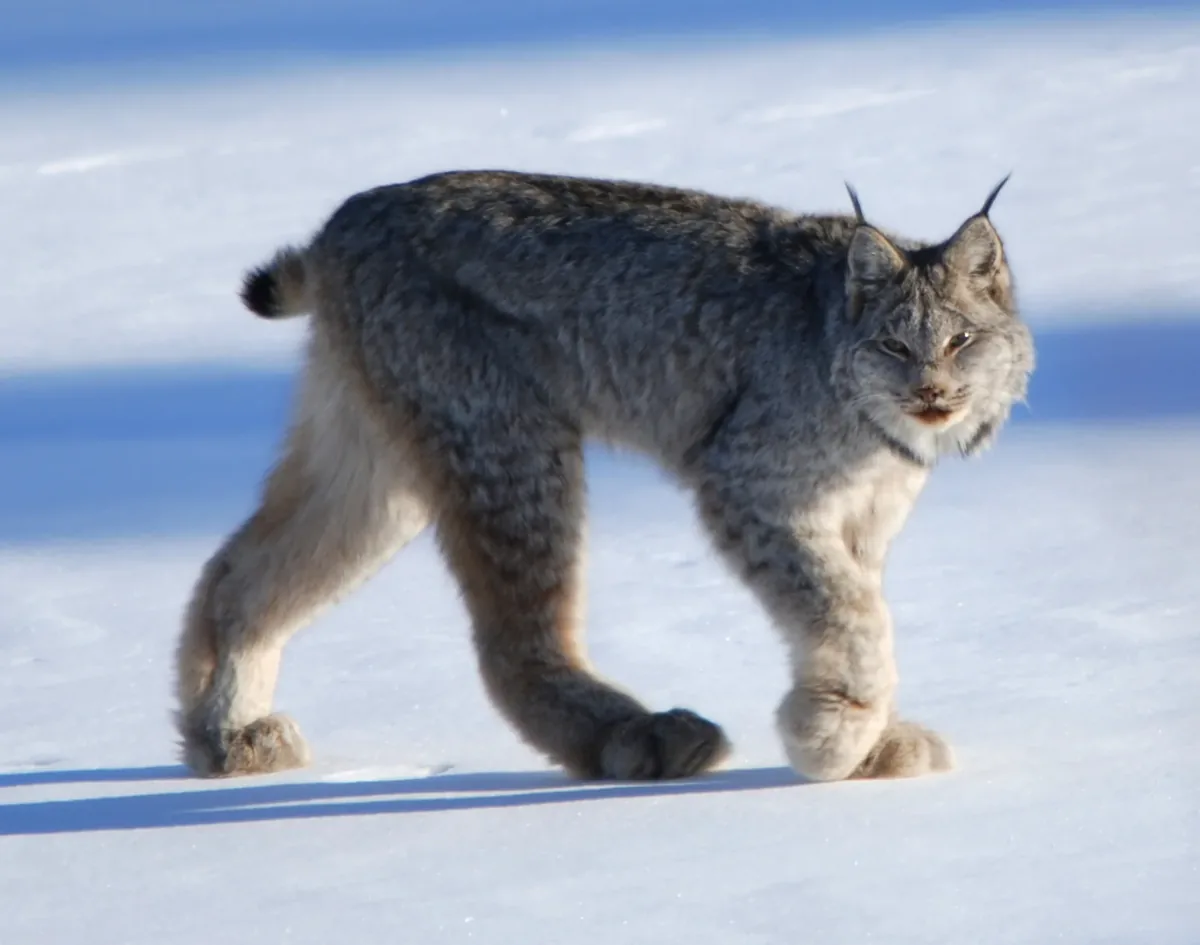
Wild Cats in Michigan: Bobcat, Lynx and Cougar Reports
Michigan's wild cats: the common bobcat, the protected Canada lynx, and cougar reports — with Michigan DNR facts, sizes and track identification.
Indoor Cat Enrichment Basics: Play, Climbing, Scratching, and Choice
A practical enrichment guide for indoor cats, including play routines, food puzzles, scratchers, windows, and rest.
Related glossary: Prey Sequence, Enrichment.